The working principle of Low Rolling Resistance (LRR) rubber conveyor belts is identical to that of standard rubber conveyor belts, both relying on the friction drive principle to achieve continuous and smooth operation.
Key Points of the Working Principle
- Drive Mechanism: An electric motor provides the torque to drive the transmission pulley (drum) into rotation.
- Power Transmission: The transmission pulley relies on friction between itself and the conveyor belt to drive the belt and the material in synchronized motion.
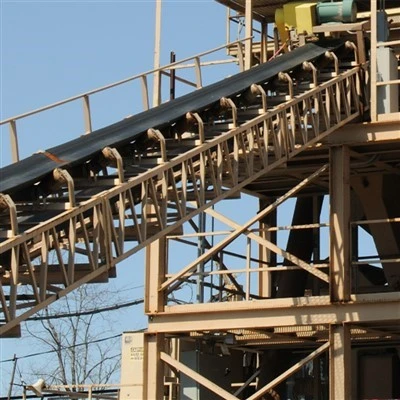
- Structural Support: The upper and lower belt layers are supported by idlers to ensure smooth running, while tensioning devices maintain appropriate tension to prevent slippage.
- LRR Characteristic: By optimizing the rubber compound (e.g., adding nano-fillers, PTFE, or specific rubber blends), the rolling resistance is significantly reduced, thereby lowering drive power requirements and improving energy efficiency.
Key Technical Methods for Low Rolling Resistance
Material Innovation:
- Utilizing wear-resistant and low-resistance components such as Hydrogenated Nitrile Butadiene Rubber (HNBR) and Ultra-High Molecular Weight Polyethylene (UHMWPE).
- Incorporating Polytetrafluoroethylene (PTFE) as a lubricant to reduce the coefficient of friction.
- Employing Carbon Nano-Onions (CNOs) or SiO₂/ADP hybrid materials to optimize the dynamic properties of the rubber compound.
- Structural Design: Creating anti-slip patterns on the surface through laser etching to balance traction with rolling resistance.
- Environmental Protection & Lifespan: New materials not only reduce energy consumption but also extend service life and decrease maintenance frequency.