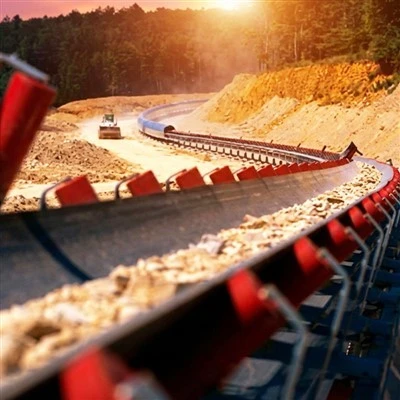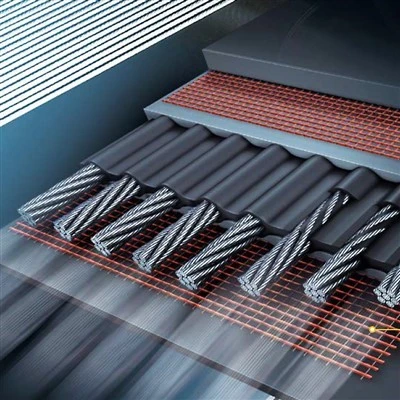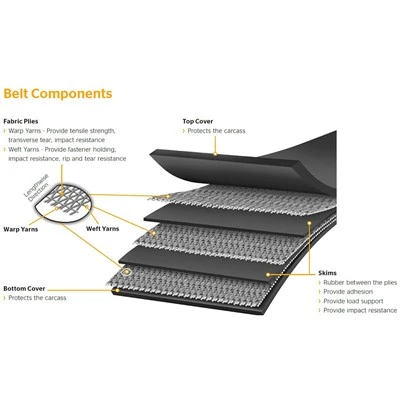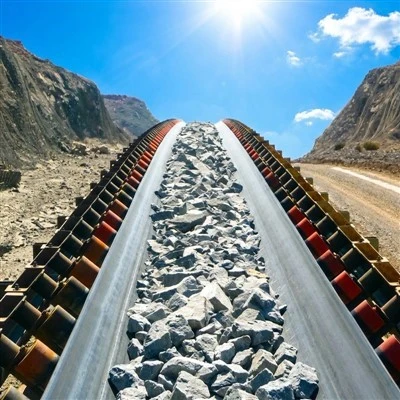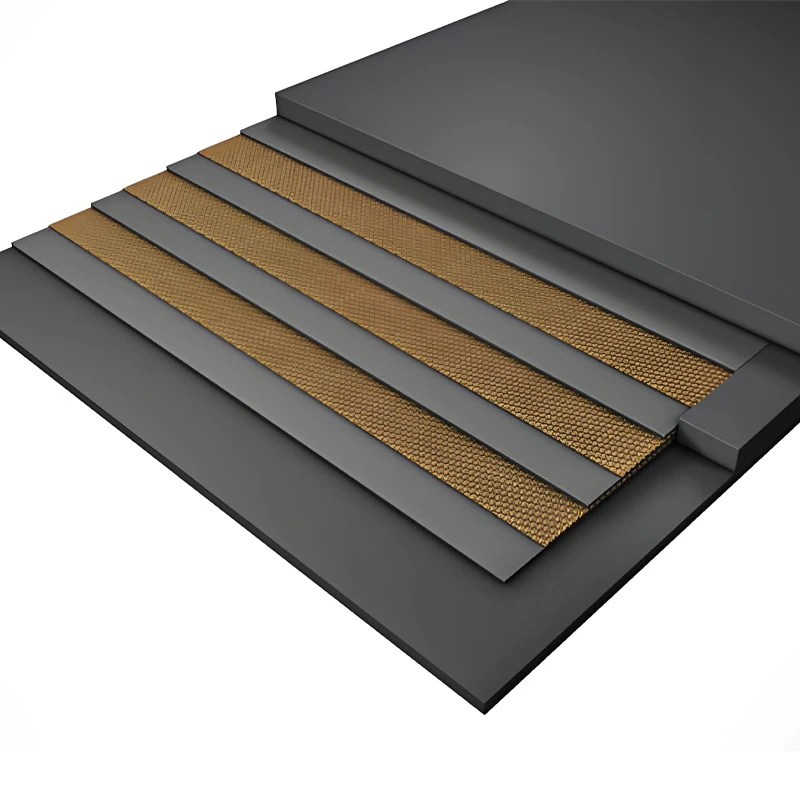
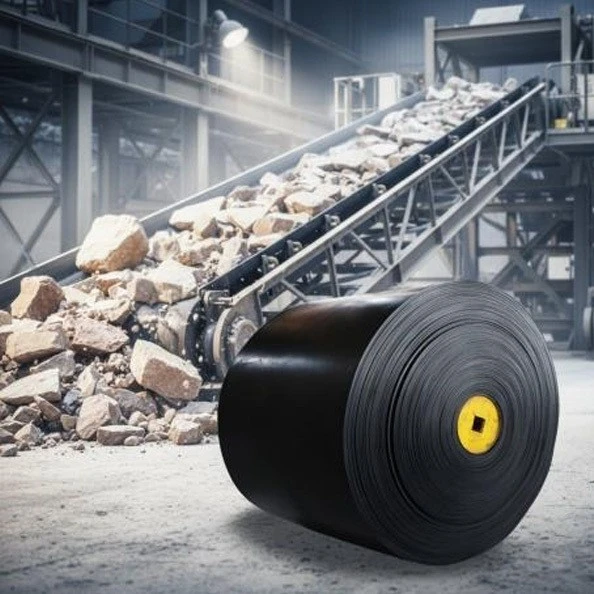
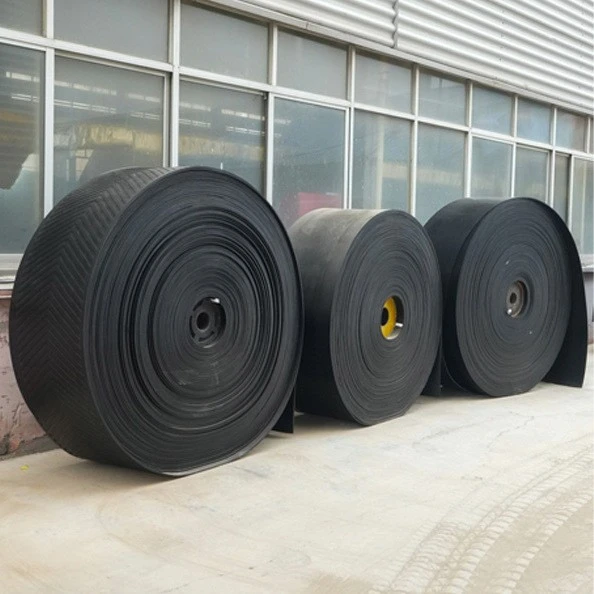
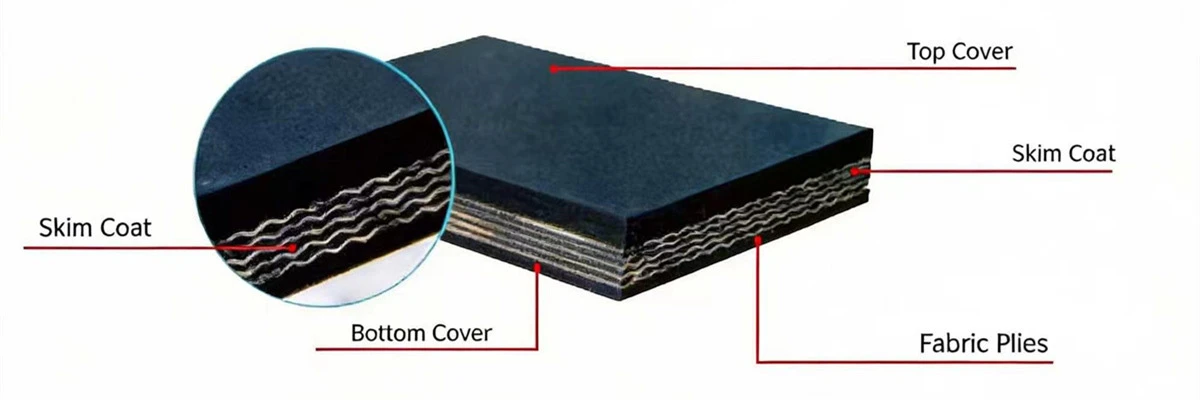
Layered fabric-cored conveyor belts (Fabric Conveyor Belt) consist of multiple layers of synthetic fiber fabric serving as the load-bearing core, with rubber adhesive between the layers and a cover rubber layer on the outside, all bonded together through high-temperature vulcanization. Depending on the material, the load-bearing core is categorized into two main series: EP polyester fabric and NN nylon fabric. EP fabric features polyester fibers in the longitudinal direction and nylon fibers in the transverse direction, offering comprehensive advantages such as lightweight construction, high modulus, impact resistance, low elongation at break, excellent troughing performance, moisture resistance, and resistance to insect damage.
Fabric conveyor belt can produce various fabric core conveyor belts with various strength and covering glue requirements according to DIN22102, GB7984, AS1332 and other standards. EP layered conveyor belts are now widely used in numerous domestic and international sectors, including mining, power generation, building materials, coal, ports, metallurgy, and chemicals.
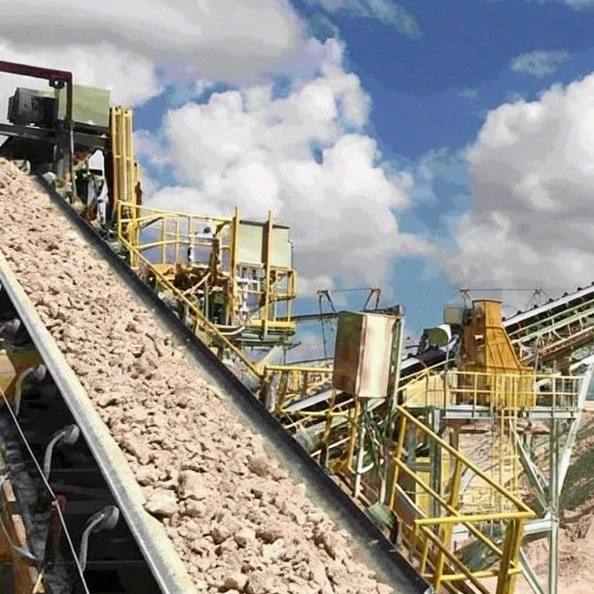
Layered belts demonstrate exceptional suitability for the mining and port sectors. Compared to steel-cord conveyor belts, layered belts are lighter, offer better tracking performance, and are more cost-effective. They are particularly suitable for medium- to long-distance, medium- to high-intensity conveying applications, such as underground coal mine tunnels, branch conveyors in metal mines, and bulk cargo transshipment in ports. When conveying powders, lightweight materials, or in operations requiring frequent turns, layered fabric-core conveyor belts - with their lightweight construction and smooth operation - offer outstanding value for money.

Key Product Advantages
1. Low elongation properties, enabling long-distance conveying
EP laminated belts feature high modulus and low elongation; their elongation rate under rated tension is far superior to that of ordinary conveyor belts. This characteristic directly addresses the trend toward "long-distance conveying" in the mining industry. The solution of installing a single long-distance belt conveyor in each tunnel, replacing the traditional segmented transportation method and effectively resolving issues such as low transportation efficiency, excessive staffing, and high maintenance costs. As customers reply they achieved smooth and efficient operation of long-distance belt transportation.
2. Exceptional Impact Resistance for Harsh Mining Conditions
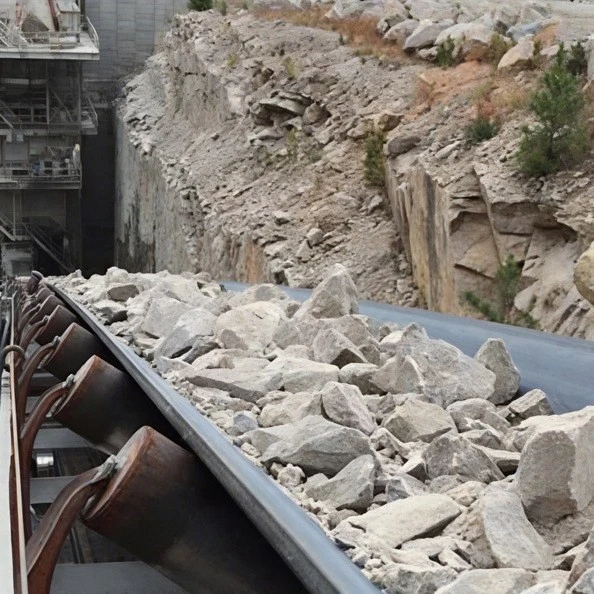
Under conditions of intense impact from large, sharp materials such as copper ore, the multi-layer canvas structure of the layered belt effectively cushions material impacts, preventing the cover rubber from tearing. For high-wear applications, the perfect combination of an innovatively developed cover rubber and high-strength carcass materials creates a multi-layered protection system capable of effectively resisting cutting and impact damage caused by falling materials. In practical applications at Australian iron ore terminals, conveyor belts specifically designed for fine-grained abrasive materials have demonstrated exceptional wear resistance, extending service life by over 30% and significantly reducing equipment maintenance costs.
3. Excellent Troughing Performance, Adaptable to Complex Terrain
Layered belts offer superior troughing performance compared to steel-cord conveyor belts, making them particularly suitable for complex underground conditions with uneven tunnel gradients and multiple turns. In Kaiyuan Company's 9715 intake tunnel, where uneven gradients and frequent belt drift were issues, the installation of a belt-pressing device enhanced lateral restraint and longitudinal positioning capabilities, successfully resolving the drift and misalignment problems.
4. Customization for Multiple Scenarios, Comprehensive Coverage of Operating Environments
Laminated conveyor belts can be classified by cover rubber properties into standard, heat-resistant, flame-retardant, cold-resistant, acid/alkali-resistant, and oil-resistant types, with belt widths ranging from B200 to B2000. They can be custom-designed to meet specific requirements based on conveying capacity, transport distance, material characteristics, and operating environments.


Selection Guide
1. Core Principles of Selection
The scientific approach to selection directly determines the operational efficiency, service life, and safety and stability of the conveying system.
First, adapt to material characteristics
For conveying lumpy, heavy-load materials (such as raw coal and ore from mines), high-strength steel cord conveyor belts should be prioritized. These belts offer high load-bearing capacity, tensile strength, and wear resistance, making them suitable for long-distance, high-load conveying; For conveying powders and lightweight materials, layered fabric-core conveyor belts are recommended. They are lightweight, operate smoothly, and offer a cost advantage.
Second, adapt to environmental conditions
In flammable and explosive environments such as underground coal mines, flame-retardant conveyor belts with a solid core must be selected to meet safety standards and eliminate fire hazards. In humid or corrosive environments, conveyor belt materials resistant to corrosion and moisture should be chosen to extend service life.
2. Selection of Key Parameters
Belt Width
Based on transport capacity, common width models include B650, B800, B1000, B1200, B1600, B1800, B2000 and even wider than B3000. Belt width selection must be coordinated with the specifications of supporting equipment such as drums and idlers to ensure precise matching between the conveyor belt width and the equipment, thereby preventing misalignment and slippage during operation.
Number of Fabric Plies
EP/NN conveyor belts typically have 1 to 10 fabric plies. A higher number of plies results in greater tensile strength, but also increases the belt's weight and cost; therefore, selection should be based on load requirements.
Cover Rubber Standard
Select the appropriate cover rubber standard based on the operating environment. We can provide various fabric core conveyor belts with various strength and covering glue requirements according to DIN22102, GB7984, AS1332 and other standards.
Key Considerations for Conveyor Belt Selection
Determine Operating Parameters
Accurately calculate the conveying distance, load weight, and operating speed to avoid selecting a belt that is either overloaded or under-rated. Do not use lightweight conveyor belts for long-distance, heavy-load applications, as this can lead to issues such as breakage and excessive wear.
Ensure Compatibility with Supporting Equipment
When selecting a belt, consider the specifications of supporting equipment such as drums and idlers to ensure that the conveyor belt's width and thickness precisely match the equipment.
Prioritize Cost-Effectiveness and Long-Term Maintenance
Avoid blindly pursuing high-end products; instead, select a suitable model based on actual operational requirements. Simultaneously, consider the difficulty of maintenance and replacement costs, giving priority to products that are easy to maintain and have a long service life.
Post-Selection Adjustments
Regularly inspect the conveyor belt's operating condition. If issues such as excessive wear or misalignment arise, promptly investigate whether the selected model is appropriate and adjust the model if necessary.
Precautions for Use and Maintenance
1. Installation and Splicing Procedures
The vulcanized splicing of multi-ply conveyor belts is a critical process. The quality of the splice directly affects the operational safety of the entire conveying system. This is particularly true under complex operating conditions - such as those found in coal mines - where steep inclines and high conveying volumes are common, making splice performance especially crucial.
Key Process Points
The splicing process does not simply connect the fabric layers of the belt; instead, the conveyor belt is peeled into layers, thoroughly abraded, coated with rubber adhesive, and covered with a thin rubber sheet (0.8–1 mm thick). The two peeled layers are then aligned, smoothed, and covered with an electric heating plate for vulcanization.
The vulcanization temperature should be controlled at 145°C ± 5°C, with a holding time equal to the belt thickness multiplied by 1.2 plus 22 minutes.
Once the temperature drops below 70°C, remove the belt from the vulcanizing machine, inspect the joint, and trim any excess edges.
Joint Quality Control
Inspect the joint area for abnormalities such as bubbles or missing adhesive. Check the centerline deviation; if the deviation exceeds 25 mm over a 10-meter length or if the joint exhibits significant bubbling, the joint must be re-bonded.
Prevent quality issues such as flapping or blistering caused by incorrect adhesive application, contaminated adhesive surfaces, or trapped air during bonding.
2. Daily Operation and Maintenance
Drift Control
Regularly check the conveyor belt's alignment. At Kaiyuan Company's 9715 intake drift, uneven tunnel surfaces caused belt drift. By scientifically arranging belt-pressing devices to enhance lateral restraint and longitudinal positioning capabilities, this issue was effectively resolved.
Regular Inspections
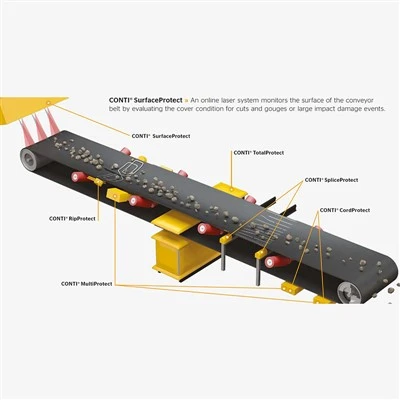
Monitor the wear condition of the cover layer to determine whether replacement or repair is necessary. After selecting the appropriate conveyor belt, dynamically adjust settings based on operating conditions and regularly inspect the conveyor belt's operational status.
Maintenance of Supporting Equipment
Ensure that idlers rotate smoothly and that scrapers function properly to prevent abnormal wear on the conveyor belt caused by jammed drums or idlers.
Hot Tags: mining fabric conveyor belt, China mining fabric conveyor belt manufacturers, suppliers, factory, Contitech Fabric Conveyor Belt, fabric conveyor belt, Mining Fabric Conveyor Belt, rubber conveyor belt, Tear Resistant Textile Conveyor Belt, Textile Conveyor Belt