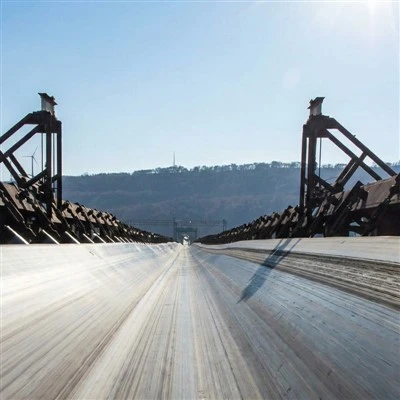
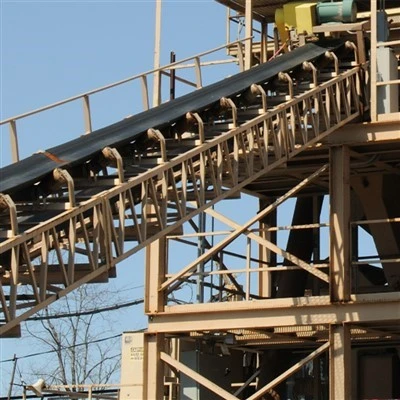
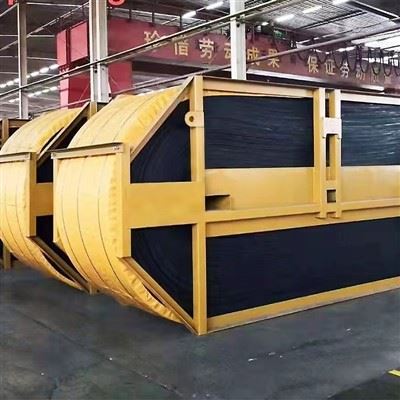
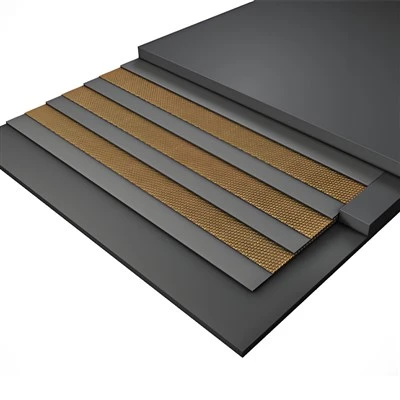
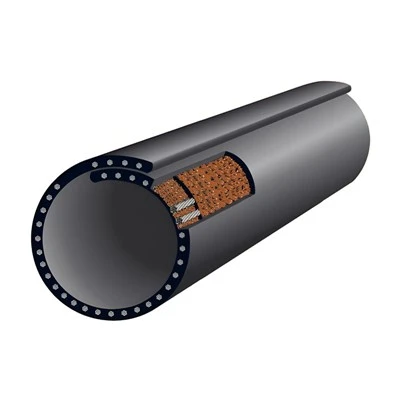
A solid woven conveyor belt utilizes a solid woven structure as its carcass (skeleton). It is widely used in scenarios demanding high resistance to fire, static electricity, and abrasion, such as underground coal mines, metallurgy plants, and ports. While its working principle aligns with other belt conveyors, its structural characteristics offer distinct advantages in load-bearing strength and operational stability.
Overview of Working Principle
The working principle is based on friction drive. The core mechanism relies on the friction between the drive pulley and the conveyor belt to achieve continuous material transport. The specific process is as follows:
- Power Input: The electric motor provides torque, which is transmitted to the drive pulley (transmission drum) via a reducer (gearbox).
- Friction Drive: The rotation of the drive pulley drives the belt in a continuous loop through friction at the contact surface.
- Material Carrying: Materials are placed onto the belt and move along with it without relative sliding, ensuring smooth transport.
Support and Guidance
- Upper idlers (typically troughed): Support the carrying side (the upper layer carrying the load).
- Lower idlers (typically flat/parallel): Support the return side (the empty lower layer returning to the start).
- Tension Adjustment: Tensioning devices maintain appropriate belt tension to prevent slippage and control sag within a safe range.
The Role of the Solid Woven Structure
- High-Strength Carcass: Woven from industrial yarns such as polyester and nylon into a solid structure, providing high tensile strength and impact resistance.
- Composite Cover: Can be coated with PVC or rubber layers depending on operating conditions, balancing flame resistance, anti-static properties, wear resistance, and friction performance.
- Suitability for Harsh Environments: Particularly suitable for underground or high-risk scenarios involving moisture, stickiness, and flammable or explosive hazards.
Typical Parameters and Advantages
- Belt Speed Range: Typically 0.8–4.5 m/s, with special designs capable of higher speeds.
- Conveying Angle: Generally ≤30°, while chevron (patterned) belts can reach up to 35°.
- System Efficiency: Approximately 70–85%.
- Advantages: High transport capacity, smooth operation, low energy consumption, minimal wear, and adaptability to long-distance continuous operations.