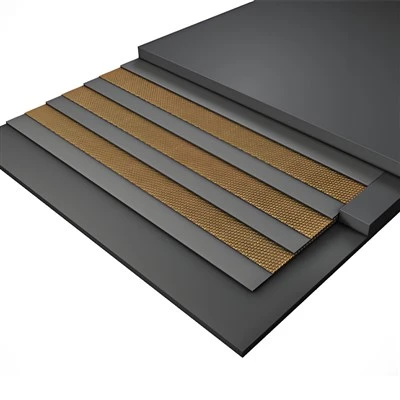
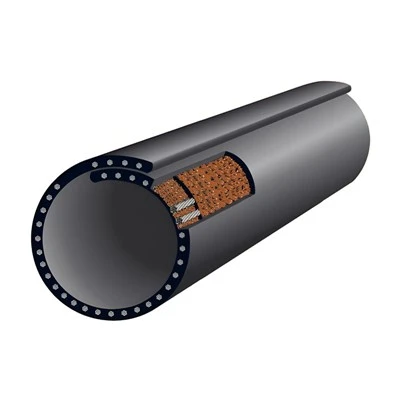
Impact and Wear Resistance: The rubber material possesses excellent elasticity and toughness, effectively absorbing the impact of falling materials. Its wear-resistant surface makes it suitable for conveying hard or sharp materials such as ores and coal.
High Adaptability: It can operate stably within an ambient temperature range of -40℃ to +80℃, and some special rubber formulations can even withstand higher or lower temperatures.
Good Anti-slip Performance: The high coefficient of friction on the rubber surface helps prevent material slippage during conveying, making it particularly suitable for inclined conveying applications.
Excellent Sealing: The compact structure of the rubber belt reduces dust leakage, improves the working environment, and meets environmental protection requirements.
Long Service Life: Under normal maintenance conditions, rubber conveyor belts have a long service life and low overall operating costs.
Convenient Installation and Maintenance: Various splicing methods (such as mechanical joints and vulcanized joints) facilitate on-site installation and replacement.
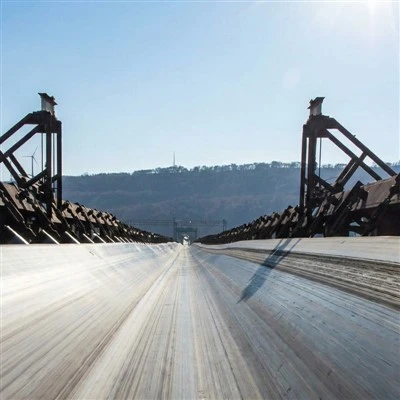
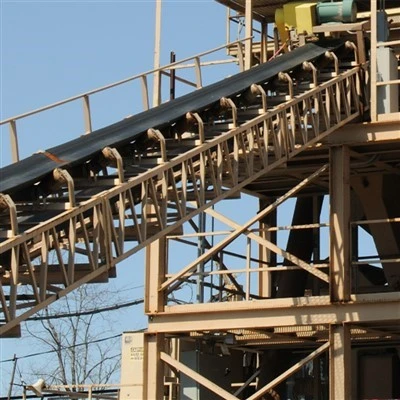
These characteristics make them widely used in industries such as mining, ports, power plants, metallurgy, and building materials.