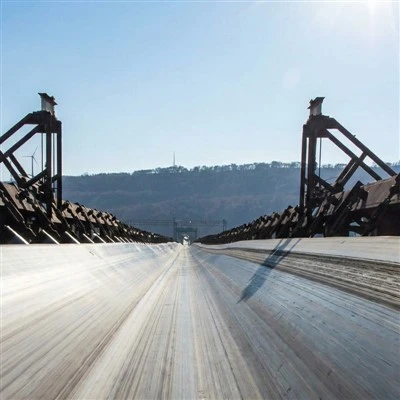
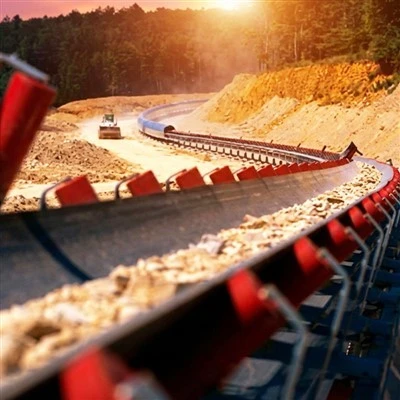
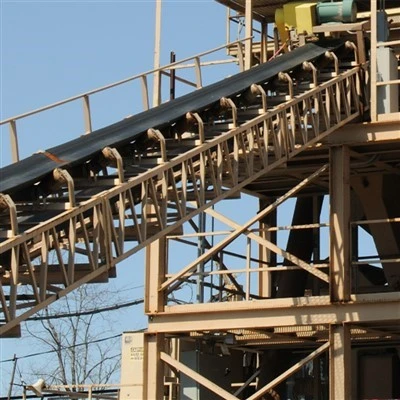
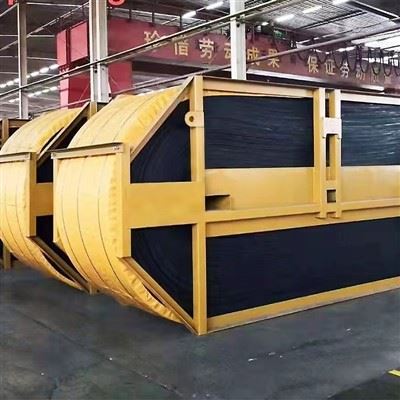
Rubber conveyor belts are core components of continuous conveying equipment widely used in industries such as mining, metallurgy, ports, and power generation.
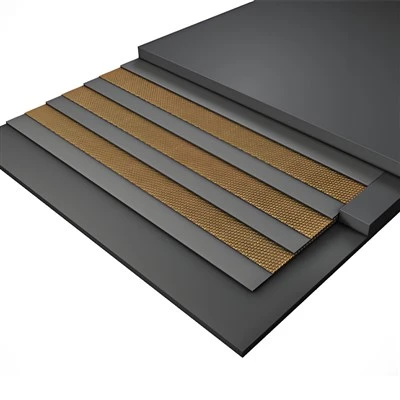
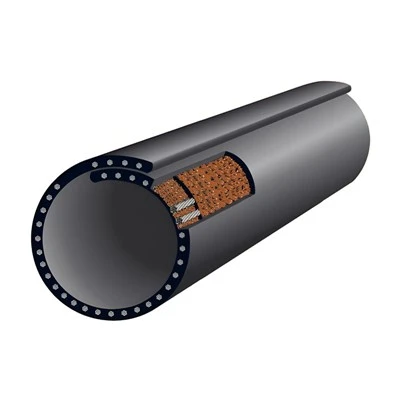
Structural Composition: Typically composed of a rubber cover layer, a reinforcing material (such as cotton canvas, nylon, polyester, or steel wire rope), and a buffer layer, forming a composite structure that balances wear resistance and tensile strength.
Load Capacity: Can be designed according to the type of reinforcing material and the number of layers to adapt to long-distance, high-load conveying of light to heavy materials (such as ore, coal, and sand).
Working Environment Adaptability: Possesses excellent wear resistance, impact resistance, and tear resistance, and can be customized with special properties such as high-temperature resistance, low-temperature resistance, oil resistance, corrosion resistance, or flame retardancy and antistatic properties.
Connection Methods: Common joint types include mechanical joints (such as metal clamps) and vulcanized joints (hot vulcanization or cold vulcanization). The latter offers higher joint strength and smoother operation.
Operating characteristics: It features low noise, low energy consumption, and continuous and stable operation, making it suitable for automated production lines and stationary conveying systems.