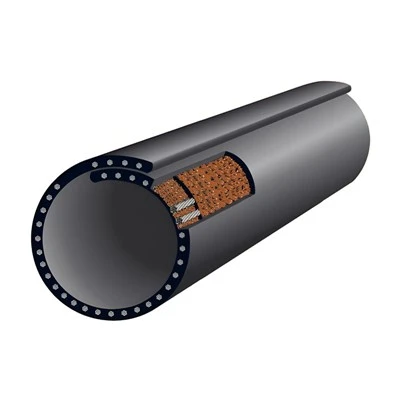
The service life of rubber conveyor belts (specifically automotive drive belts) is influenced by factors such as ambient temperature, the condition of the drive system, external debris, lubricating oils, and installation tension. Key maintenance practices include regular inspections, maintaining cleanliness, and controlling installation tension. The details are as follows:
Ⅰ. Factors Affecting Service Life
⑴ Ambient Temperature
Experiments show that the service life of drive belts drops sharply as the ambient temperature rises. In modern engine compartments, compact designs, high compression ratios, and turbocharging technologies have led to increased temperatures, drastically worsening the operating environment for drive belts. For instance, during hot summer days, ignoring the water temperature gauge can not only damage the engine but also accelerate the aging of drive belts. In high-temperature environments, rubber belts are prone to thermal aging, resulting in performance degradation.
⑵ Condition of the Drive System
Drive belts have extremely high requirements for the coplanarity and coaxiality of the drive system. If components wear out over prolonged operation within the same drive plane, the original coplanarity or coaxiality can be compromised, leading to uneven wear or belt fracture. For example, axial misalignment of a pulley can cause excessive localized stress on the belt's edge, accelerating wear.
⑶ External Debris
The complexity of driving environments can cause foreign objects (such as sand, gravel, or metal shavings) to splash onto timing belts or pulleys. During high-speed operation, these objects act like small knives, cutting into the belt and causing rapid failure. For instance, if the drive system is not cleaned promptly after driving on muddy roads, debris may become embedded in the belt teeth, leading to breakage.
⑷ Lubricating Grease and Oil
Lubricants accelerate the aging process of rubber. If hands are greasy during belt removal or installation, or if the belt accidentally comes into contact with oil, it must be handled with caution and replaced as soon as possible. The chemical components in grease can penetrate the rubber layer, destroying its molecular structure, which leads to increased hardness and decreased elasticity.
⑸ Installation Tension
Timing Belts: Their cords are often made of fragile glass fiber. Bending the belt at a small radius can cause severe attenuation of its tensile strength. During installation, avoid bending the belt at too small a radius (e.g., when wrapping it around a dowel, ensure the radius meets specifications).
Accessory Belts: Installation tension directly affects performance. Insufficient tension causes slippage, exacerbating wear on the belt's sides and accelerating aging due to frictional heat; excessive tension can lead to belt breakage or bearing damage.
Ⅱ. Maintenance Essentials
⑴ Regular Inspection of the Drive System
Check the coplanarity and coaxiality of pulleys to ensure there is no component wear or misalignment.
Inspect the belt surface for cracks, fraying, or embedded debris; clean or replace as necessary.
Regularly check belt tension and adjust it to the specified value using specialized tools.
⑵ Maintaining a Clean Environment
After driving in harsh conditions, promptly clean mud, oil, and other debris from the surface of the drive system.
Avoid long-term parking in dusty or humid environments to reduce the risk of foreign matter adhesion.
⑶ Controlling Installation Tension
Timing Belts: Use specialized tools during installation to ensure the bending radius meets requirements, preventing the fracture of glass fiber cords.
Accessory Belts: Adjust tension according to the vehicle manual, and regularly re-check and adjust to prevent slippage or overloading.
⑷ Avoiding Contact with Lubricants
Ensure hands are clean and free of grease residue when removing or installing belts.
If a belt comes into contact with oil, immediately wipe it with a cleaner and replace it; do not continue using it.
⑸ Optimizing the Working Environment
In high-temperature environments, reduce temperatures by improving engine bay ventilation or installing heat shields.
Avoid prolonged high-load operation to minimize belt aging caused by overheating.