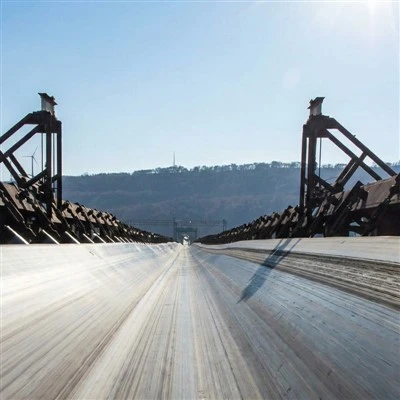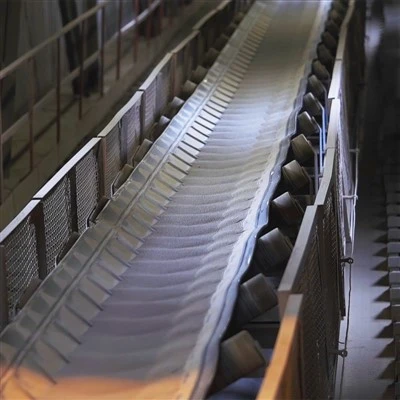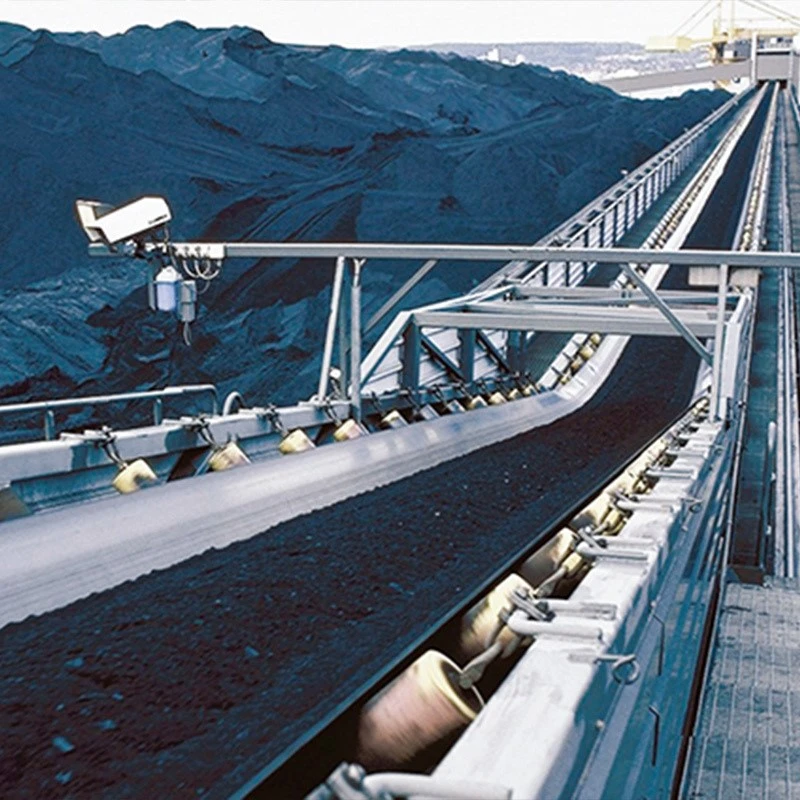
PVC solid woven fire resistance conveyor belts are non-metallic composite industrial conveyor belts featuring a polyvinyl chloride (PVC) cover and a solid woven polyester fabric carcass. They are widely used for bulk material handling in underground coal mines, as well as in the metallurgy, chemical, and power industries.
PVC conveyor belts can be classified into three main types based on their structure and application:
① Standard PVC Light-Duty Conveyor Belts: These feature a multi-layer composite structure with a fabric core, with thicknesses ranging from 0.8 to 11.5 mm. They are suitable for light-duty material handling applications in industries such as food, tobacco, logistics, and packaging.
② PVC Solid-Core Flame-Retardant Conveyor Belts (PVC Full-Core Flame-Retardant Type): Manufactured by impregnating and plasticizing or vulcanizing a solid belt core with polyvinyl chloride (PVC) cover, these belts feature high strength, high capacity, and stable transport performance. They also offer excellent flame retardancy, antistatic properties, impact resistance, wear resistance, and corrosion resistance, making them specifically designed for material transport in underground coal mines, as well as in the metallurgy and chemical industries.
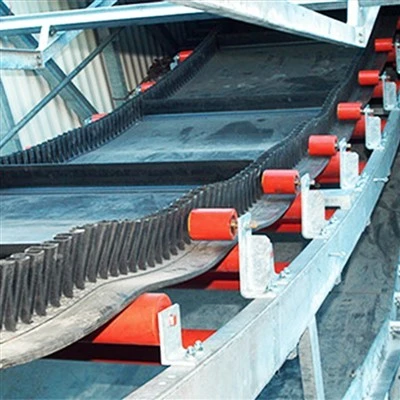
③ Sidewall PVC Conveyor Belts: They combine the flexibility of PVC material with the stability of a structured design, making them widely applicable for steep incline and vertical lift conveying applications.

PVC solid woven fire resistance conveyor belts play an irreplaceable and critical role in underground coal mines and in the conveyance of various bulk materials, it also offer a range of properties, including acid and alkali resistance, anti-adhesion, and flame retardancy. Some models feature low surface resistance, making them suitable for anti-static applications such as in the electronics industry. They can handle a maximum throughput of 6,000 cubic meters per hour and support the installation of accessories such as baffles and sidewalls to accommodate various conveying requirements.
|
Technical Parameters |
Application Features |
|
Tensile Strength |
680S, 800S, 1000S, 1250S, 1400S, 1600S or above |
|
Longitudinal elongation at break |
15%~18% |
|
Cover standard |
PVC Type (Full PVC covering), PVG Type (PVC+rubber composite) |
|
Conveyor Incline |
PVC Type: <16° (dry environment); PVG Type: <20° (humid environments) |
|
Flame Retardancy |
Drum friction temperature ≤325°C; average alcohol torch burn time ≤3 seconds / individual value ≤10 seconds |
|
Electrical Conductivity |
Surface resistance ≤3×10⁸ Ω |
|
Jointing Method |
Mechanical buckles (joint strength 60–80%) / Adhesive joints (joint strength 90%) |
|
The above data complies with standards such as MT914, BS3289, and HG2805. The safety factor for selection is 10 (breaking strength × 1/10). It is recommended to use a smaller drive pulley diameter to match the belt's good flexibility. |
|
Application Scenarios and Fields
They are the core equipment of underground coal mine conveying systems. Product types include PVC solid woven flame retardant conveyor belts and PVC lightweight conveyor belts, among others. End-use applications span multiple sectors, including mining, power generation, metallurgy, and the chemical industry.
Core Applications:
- Raw coal conveyance in main underground tunnels
- Conveyance in longwall mining face haulage galleries
- Conveyance from underground transfer points to the mine head
- Underground waste rock discharge systems
In coal mining conveyance, when traditional multi-ply rubber conveyor belts pose significant risks when operating in damp, muddy, or high-maintenance environments, buyers typically opt for PVC/PVG solid-core flame-retardant conveyor belts due to their superior properties, including flame retardancy, antistatic properties, impact resistance, wear resistance, and corrosion resistance.
The metallurgical industry is one of the key application areas for PVC/PVG conveyor belts. Thanks to their flame-retardant and antistatic properties, PVC conveyor belts are widely used in the handling of high-temperature, high-risk materials such as sintered ore, coke, and pulverized coal.
Typical Applications:
- Coke plant coke conveying systems
- Sinter plant ore powder conveying
- Blast furnace charging systems in ironmaking plants
- Conveyor lines for metallurgical auxiliary materials
Power plants represent one of the core application markets for PVC/PVG conveyor belts. These products are primarily used in coal handling systems at thermal power plants, where they transport coal from the coal yard to the boiler room. This application imposes extremely stringent requirements on the conveyor belts' flame-retardant properties and reliability for continuous operation.
Hot Tags: fire resistence PVC conveyor belt, China fire resistence PVC conveyor belt manufacturers, suppliers, factory, Fire Resistence PVC Conveyor Belt, pvc conveyor belt, solid woven conveyor belt