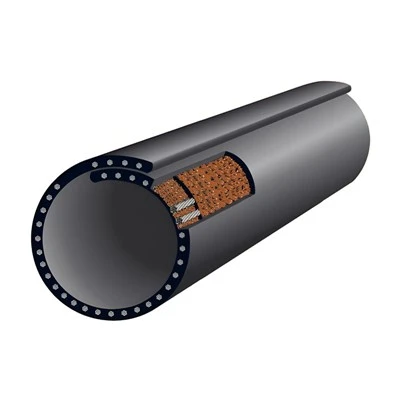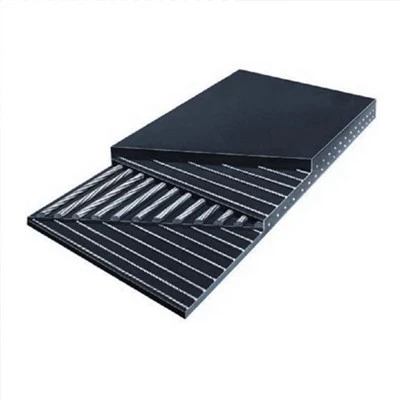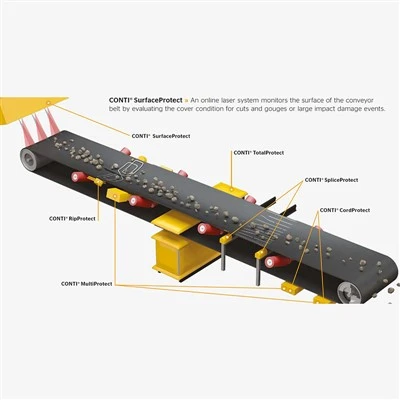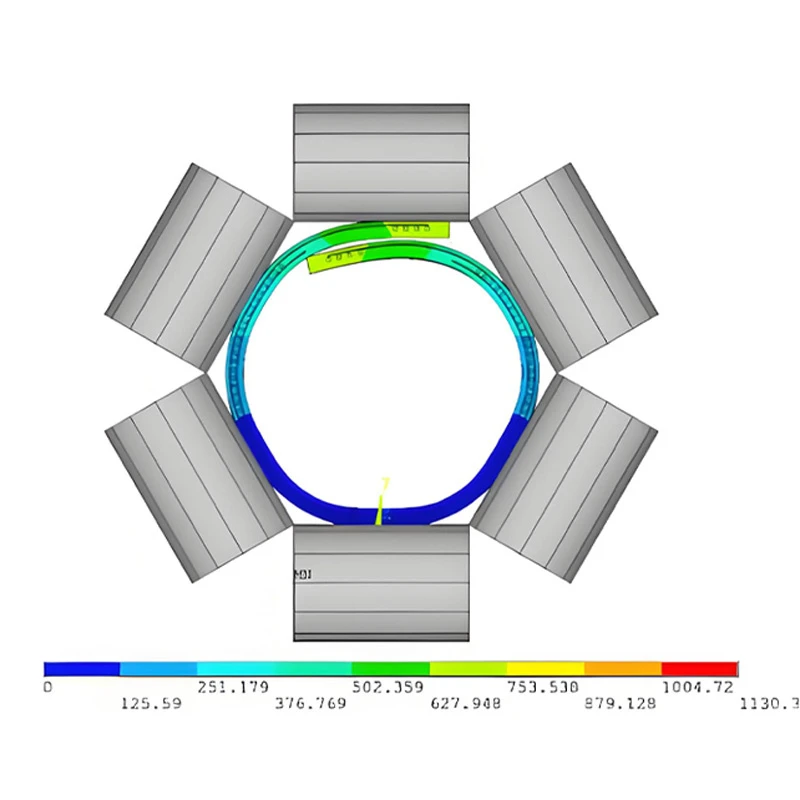
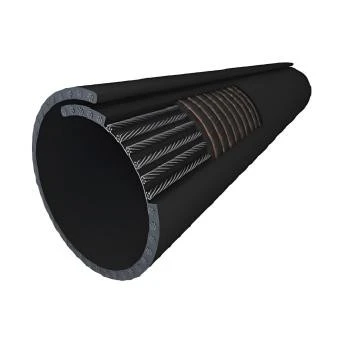
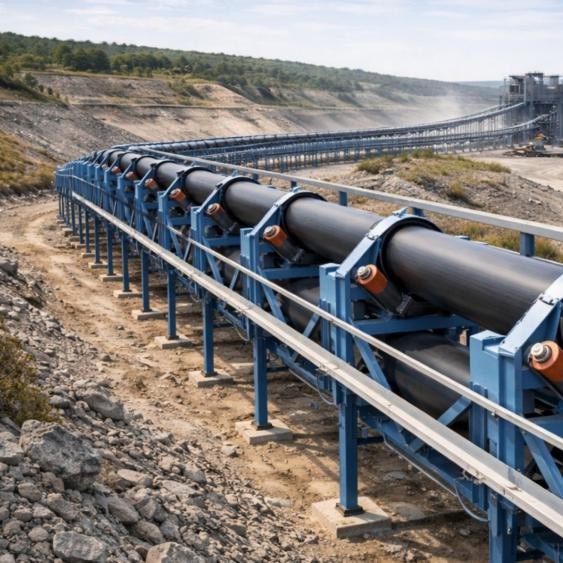
Pipe conveyor belts / Tubular conveyor belts offer significant advantages in terms of environmental protection and energy conservation, making them a key technology for driving the transition toward green, low-carbon bulk material transportation. Due to their exceptional environmental friendliness, safety, and adaptability to various spatial constraints, they have become a core solution for modern bulk material transportation. "Formability" and "fatigue life" are the key indicators used to assess their quality. Our company's successful participation in numerous major projects has demonstrated the reliability of our technology and helped our clients achieve significant increases in operational efficiency.
Key Application Features of Pipe Conveyor / Tabular Conveyor Belts
Its fully enclosed tubular structure addresses environmental concerns at the source. Materials remain sealed within the pipes throughout the entire process, achieving true "zero spillage" and eliminating material loss and airborne dust pollution during transport. Compared to traditional systems, dust emissions can be reduced by up to 90%, while effectively isolating noise.

Resource and Ecological Conservation
The system is installed overhead, requiring minimal land use. Once construction is complete, the farmland beneath can be returned to cultivation, and it prevents material contamination of water sources along the route. The tubular structure also protects the material from wind and rain erosion, ensuring consistent quality.

Safe and Efficient, Enhancing Operational Benefits
The fully enclosed tubular structure effectively prevents materials from getting wet in the rain or blown away by the wind during conveyance, ensuring material quality and transport efficiency. It also features bidirectional conveying capability, providing greater operational flexibility in specific route layouts. From an economic perspective, it effectively reduces unit transport costs compared to truck transportation.
Maximum recommended material loading ratio: 75%
Maximum recommended power utility: full load-less than 80% of rated power


Select carcass reinforcement according to conveying distance, take-up travel, belt tension rating:
- Fabric pipe belt (short length, low belt tension rating)
- Steel cord pipe belt (long distance, high belt tension rating)
- Select covers according to material type, temperature, and energy saving requirement
- Ambient low wear, acid/alkali resistant, heat resistant, flame resistant, energy saving low rolling resistance
Main Applications
Pipe conveyor belts are widely used in various industries where environmental protection and conveying efficiency are of the utmost importance.
Energy Conservation and Consumption Reduction: Systematic Cost and Energy Optimization
Key Advantages
Energy consumption is effectively reduced through a low-rolling-resistance compound (which can lower energy consumption by 15%–30%) and lightweight materials such as aramid (which reduces self-weight by approximately 30% while maintaining equivalent strength, saving about 10% in power consumption). Overall power consumption is 30% lower than that of conventional belt conveyors.
System Optimization Benefits
Due to their ability to navigate turns in confined spaces, tubular conveyors can significantly reduce intermediate transfer points, directly lowering energy consumption, equipment investment, and maintenance costs associated with material transfer.
The table below summarizes their main applications and typical materials:
|
Application area |
Application Scenarios |
Materials Handled |
|
Coal and Mining Industry |
Long-distance transportation within and outside mines (e.g., coal, copper, and iron mines) and between mines and processing plants |
Coal, ore, tailings |
|
Power Generation Industry |
Fuel transportation for thermal power plants, particularly long-distance conveyance from docks or coal yards to boilers |
Pulverized coal, limestone |
|
Cement and Building Materials Industry |
Material transportation connecting mines and cement plants across complex terrain |
Cement clinker, limestone, sand and gravel |
|
Steel and Metallurgy Industry |
Material supply from raw material yards to production lines within steel mills, as well as inter-plant logistics |
Coke, iron ore, limestone |
|
Ports & Terminals |
Efficient, low-loss material transfer between ships and stockpiles or inland warehouses |
Coal, iron ore |

Successful Projects Reference
The system has achieved significant emission reductions.
A China Coal Mining Area project in Shanxi province, by using an enclosed pipe conveyor belt system, the amount of coal exposed to the natural environment during transport is reduced, which not only minimizes contamination of the coal but also reduces the coal's impact on the environment, according to calculation the new system reduces coal dust emissions by 2,880 tons per year.


The 30-kilometer belt conveyor project in Hebi, Henan, reduces carbon dioxide emissions by 270,000 tons annually, while consuming only about 10 kilowatt-hours of electricity per ton of coal transported over a distance of 30 kilometers. Compare to heavy-duty trucks transportation - much more environmental conveying solution.
Hot Tags: environmental pipe conveyor belt, China environmental pipe conveyor belt manufacturers, suppliers, factory, Environmental Pipe Conveyor Belt, High Performance Pipe Conveyor, Mining Pipe Conveyor Belt, pipe conveyor belt, Premium Pipe Conveyor Belt, Premium Tube Conveyor Belt