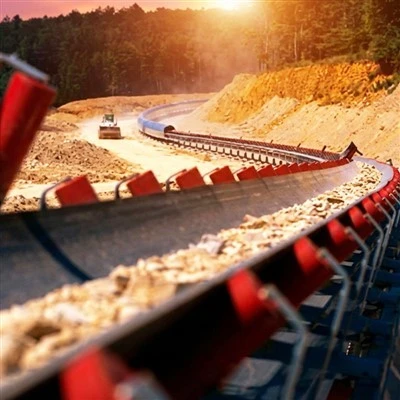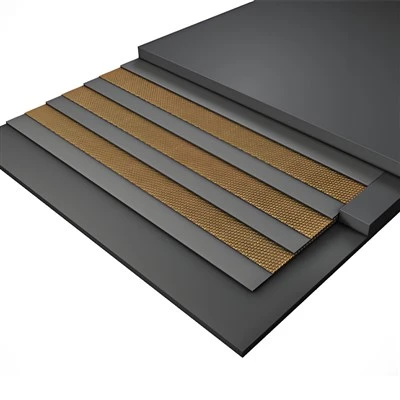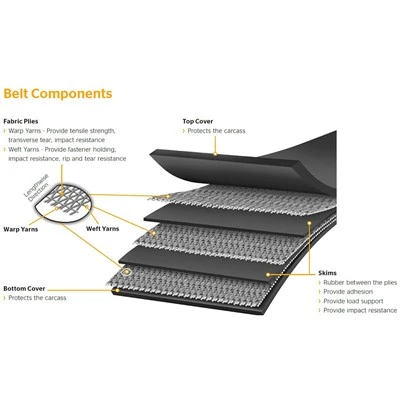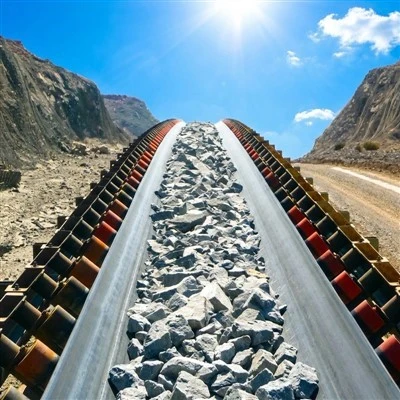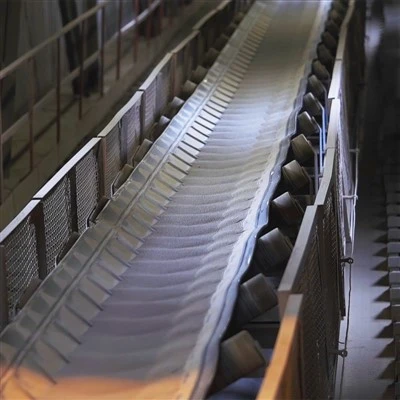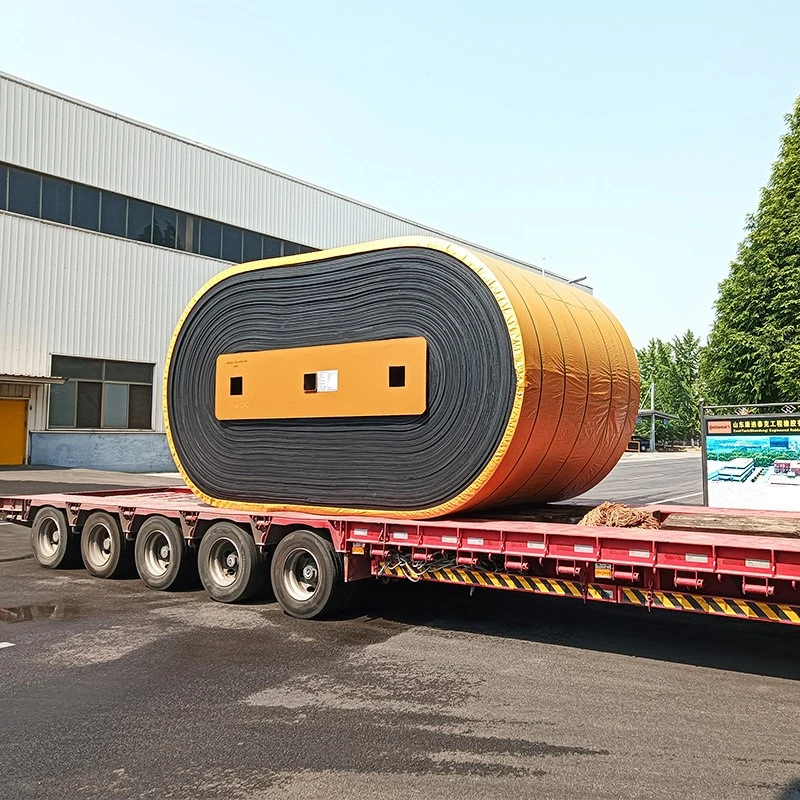
The Nylon Conveyor Belt is specifically engineered for high-speed and large-capacity material conveying applications, making it ideal for use in mines, cement factories, iron and steel plants, metallurgical plants, construction ports, and other industries. It is perfectly suited for transporting coal, ore, sand, gravel, steel castings, crops, bulk materials, and various types of bagged goods, ensuring efficient and reliable material handling and transfer.
Features

· Excellent Fastener Retention
· Outstanding tear resistance and impact resistance
· High ultimate tensile strength
· Reduced elongation
· Standard offset stepped joints
· Various fabric carcass constructions

· A wide range of cover compounds and thickness options
· Superior adhesion
· Exceptional abuse resistance
· Excellent surface cleanliness
· Good troughability
· Optimal tracking for conveyor belts
|
Physical Property of Fabric |
||||||||||||
|
Carcass |
Carcass Structure |
Carcass Type |
Carcass Thickness (mm/p) |
Strength (N/mm) |
Cover Thickness (mm) |
Width (mm) |
||||||
|
Warp |
Weft |
2ply |
3ply |
4ply |
5ply |
6ply |
Top Cover |
Bottom Cover |
||||
|
Nylon (NN) |
Nylon (NN) |
Nylon (NN) |
NN100 |
1.00 |
200 |
300 |
400 |
500 |
600 |
1.5-30 |
1.5-20 |
300-3500 |
|
NN125 |
1.00 |
250 |
375 |
500 |
625 |
750 |
||||||
|
NN150 |
1.10 |
300 |
450 |
600 |
750 |
900 |
||||||
|
NN200 |
1.20 |
400 |
600 |
800 |
1000 |
1200 |
||||||
|
NN250 |
1.40 |
500 |
750 |
1000 |
1250 |
1500 |
||||||
|
NN300 |
1.60 |
600 |
900 |
1200 |
1500 |
1800 |
2-30 |
2-20 |
||||
|
NN350 |
1.70 |
700 |
1050 |
1400 |
1750 |
2100 |
||||||
|
NN400 |
1.90 |
800 |
1200 |
1600 |
2000 |
2400 |
||||||
|
NN500 |
2.10 |
1000 |
1500 |
2000 |
2500 |
3000 |
||||||
|
NN630 |
2.60 |
1260 |
1890 |
2520 |
3150 |
3780 |
||||||
Maintenance Tips for Nylon Conveyor Belts
Proper maintenance plays an important role in keeping nylon conveyor belts running smoothly and extending their service life. In daily use, the following points are worth paying attention to:
Regularly inspect the belt
Routine inspection can help identify early problems, such as belt wear, misalignment or surface damage. By addressing these problems early, you can avoid higher repair costs and unneeded downtime.
Clean the belt and the system regularly
Dust, debris, and leftover materials should be removed to avoid excessive wear on the belt surface. Keep the conveyor system clean in some industries such as food processing to meet hygiene requirements.
Keep the belt at an appropriate tension
The belt should be maintained at a level that is suitable. It can affect the efficiency of conveying and cause belt damage if it is too tight or loose.
Lubricate moving components when necessary
Using appropriate lubricants to reduce friction and wear. It not only promotes smoother operation but also extends the life of the entire conveyor system.
Hot Tags: nylon conveyor belt, China nylon conveyor belt manufacturers, suppliers, factory